

On June 4, the research group led by Zhiwei Ma from the School of Biomedical Engineering at ShanghaiTech University (Translational Neuroimaging Laboratory), in collaboration with the research groups led by Qi Xu and Xiaojun Wu from Shanghai University of Traditional Chinese Medicine, published a research paper titled “Green tea catechin EGCG attenuates hippocampal atrophy and cognitive impairment in obesity via autophagy signaling” in npj Science of Food, a Nature Portfolio journal. Focusing on the problem of obesity-induced hippocampal atrophy and cognitive decline, this work integrates imaging and nutritional information from the UK Biobank population cohort with imaging and molecular mechanism studies in animal models, revealing the neuroprotective effects of EGCG, an active component of green tea.
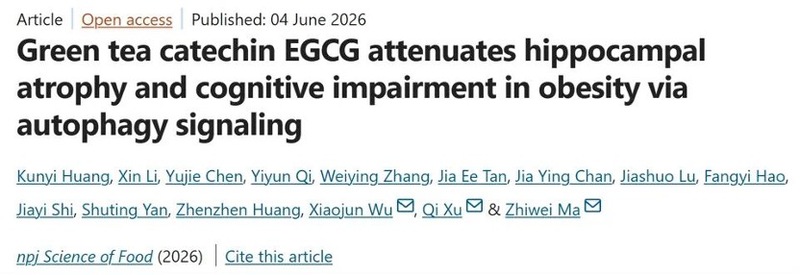
Obesity is a common chronic health problem that not only increases the risk of cardiovascular diseases, but also causes damage to brain structure and function. Multiple imaging studies have shown that hippocampal atrophy is an early and sensitive biomarker of cognitive decline. Therefore, exploring natural bioactive components that can safely and effectively reverse obesity-related hippocampal atrophy has become an important direction in current clinical and public health fields.
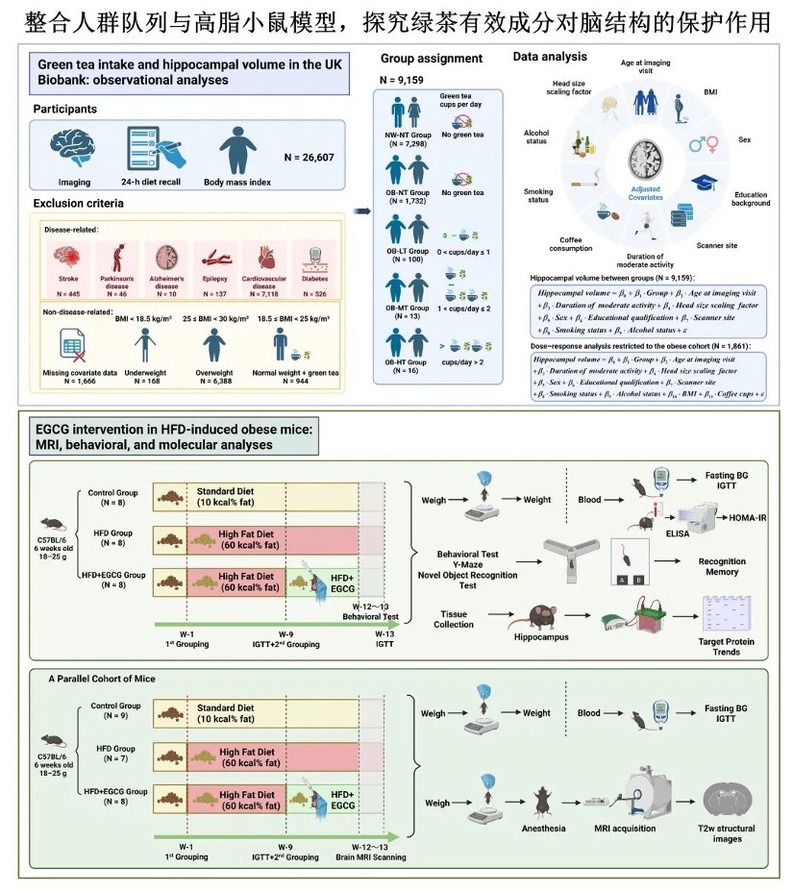
To this end, the research team established a new cross-species research paradigm ranging from population cohorts to validation in animal models. The team first used magnetic resonance brain imaging and dietary survey data from nearly 10,000 adult participants in the UK Biobank to conduct an epidemiological analysis. The researchers found that among adults with obesity, green tea intake showed a positive linear trend with hippocampal volume measured by imaging, providing important population-level clues for the neuroprotective effects of green tea’s active components.
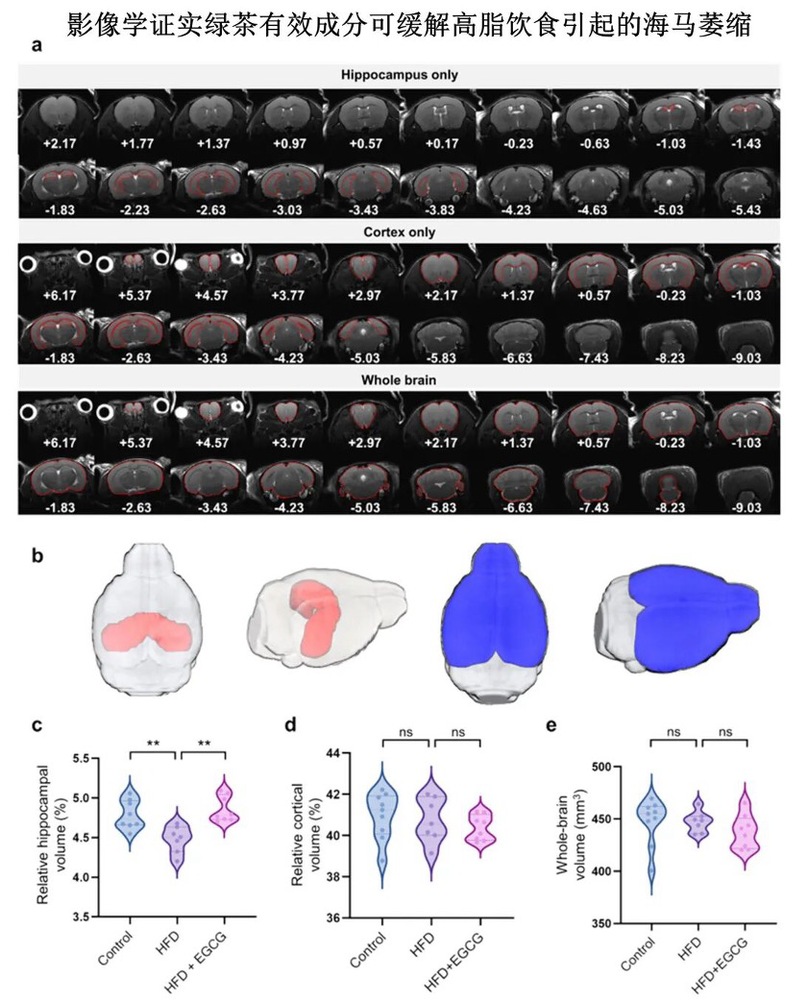
To further clarify the potential causal relationship and mechanism, the team intervened in a high-fat diet-induced obese mouse model using an equivalent dose of EGCG that humans can obtain through daily tea drinking. Results from 9.4T ultra-high-field small-animal magnetic resonance imaging and behavioral assessments showed that EGCG intervention could effectively reverse hippocampal atrophy caused by a high-fat diet and successfully restore impaired learning and memory abilities in mice. At the molecular level, EGCG effectively inhibited neuroinflammation, repaired insulin signaling in the brain, and restored neuronal autophagy homeostasis to accelerate the clearance of damaged organelles. This systematic microscopic repair protected synaptic structures, providing solid support for the macroscopic imaging observations.
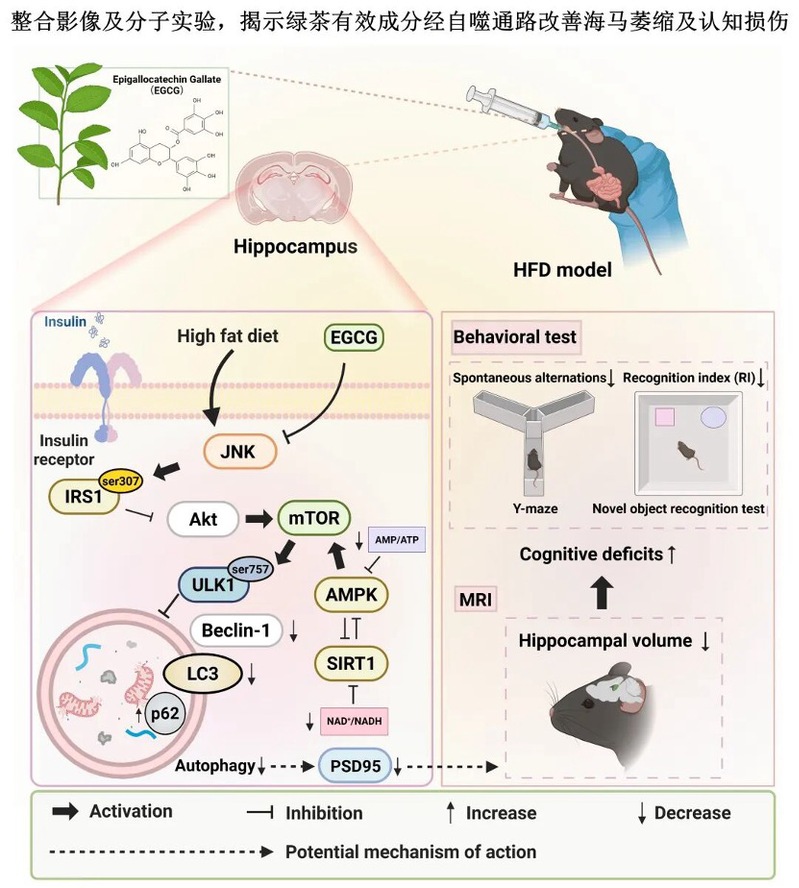
By integrating the UK Biobank population cohort, animal brain imaging, behavioral assessments, and molecular mechanism experiments, this study constructed a cross-scale evidence chain from population-based observational clues to preclinical mechanism validation. It provides new research ideas for understanding obesity-related brain injury and interventions using dietary bioactive components, and also demonstrates the application potential of translational neuroimaging in research on nutrition and brain health.
Professor Zhiwei Ma from the School of Biomedical Engineering at ShanghaiTech University, Professor Qi Xu from Shanghai University of Traditional Chinese Medicine, and Professor Xiaojun Wu from Shanghai University of Traditional Chinese Medicine are the co-corresponding authors of the paper. Visiting student Kunyi Huang from the research group led by Zhiwei Ma at ShanghaiTech University, master’s student Xin Li from the research group led by Zhiwei Ma at ShanghaiTech University, and master’s student Yujie Chen from the research group led by Qi Xu at Shanghai University of Traditional Chinese Medicine are the co-first authors of the paper. ShanghaiTech University is the first completion unit. The Ultra-High-Field Animal Imaging Platform of the School of Biomedical Engineering at ShanghaiTech University and the High-Performance Computing Platform of the Library and Information Center at ShanghaiTech University provided equipment support for this study.
Paper link:
https://doi.org/10.1038/s41538-026-00914-4
